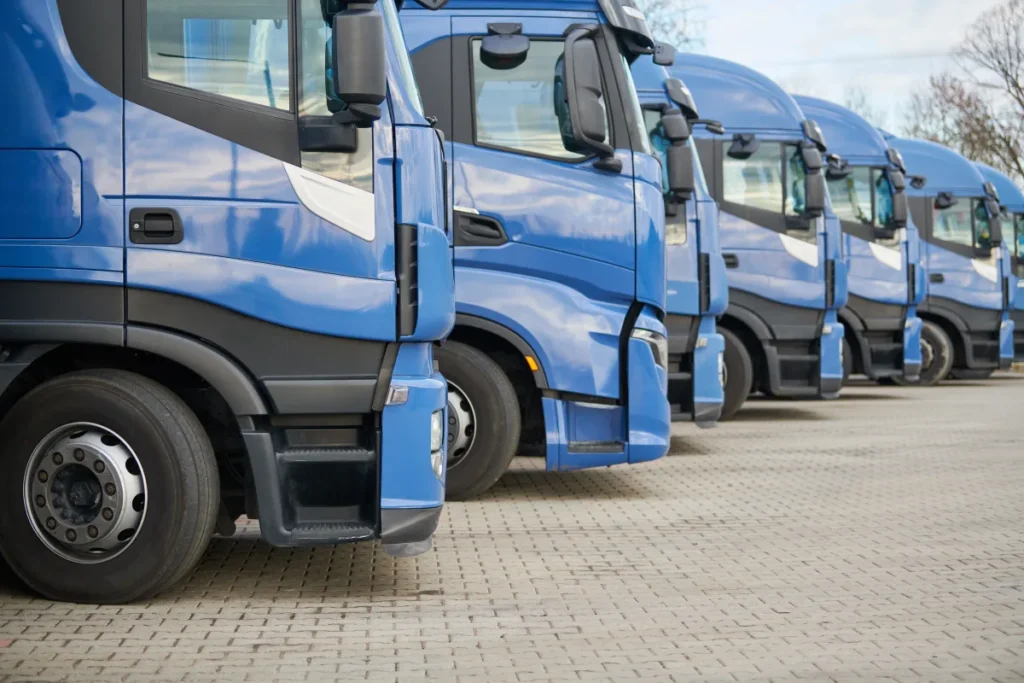
Haulage companies move goods by road for manufacturers, wholesalers, retailers, builders, farms, importers and exporters that need freight collected, carried and delivered safely, legally and on time. In practice, the job is not just putting a pallet or load on a lorry. A decent haulier plans vehicle type, weight, access, loading method, delivery windows, driver hours, insurance, paperwork and what happens if the customer, site or traffic causes a delay.
What haulage companies actually do
Road transport for commercial goods
Most haulage companies provide business to business road transport, from single pallets and part loads through to full articulated trailer movements. The work may involve curtainsiders, flatbeds, box vans, temperature controlled vehicles, walking floors, tankers, low loaders, rigids with tail lifts, or specialist trailers for machinery and awkward freight.
A normal haulage job starts with the load details. The haulier needs the collection postcode, delivery postcode, goods description, weight, dimensions, pallet count, loading method, delivery deadline, access restrictions and whether the goods are stackable, fragile, hazardous or time critical.
Typical haulage scope
- Local and national general haulage.
- Part load and full load movements.
- Palletised freight, machinery, building materials and retail stock.
- Port collections and deliveries, including container work linked to maritime transport.
- Timed deliveries to factories, construction sites, distribution centres and events.
- Regular contract haulage for repeat lanes and scheduled runs.
How haulage companies work in practice
From booking to delivery
Good haulage is won or lost before the vehicle leaves the yard. If the load is 1,000kg on one standard pallet, that is a very different job from 12 pallets at 8 tonnes, a long steel load, a machine needing ramps, or loose goods needing a flatbed and straps. A professional operator will ask enough questions before quoting, because wrong information causes failed collections, wasted mileage and claims.
Some operators use subcontractors, a courier exchange or a haulage exchange to cover work outside their own fleet area. That is not automatically a problem, but the buyer should know who is actually carrying the goods, what insurance applies and whether the carrier has suitable vehicles and authority. For sensitive freight, high value goods or regular contract work, I would always prefer named carrier control rather than an anonymous exchange booking.
Common service models
- Spot hire, used for one off jobs priced load by load.
- Contract haulage, used for regular routes, often priced by day, route or vehicle.
- Groupage, where your goods share trailer space with other consignments.
- Dedicated vehicle, where the vehicle carries only your load.
- Port and container haulage, often involving shipping lines, container numbers, VBS slots and demurrage risk.
Choosing haulage companies for your business
Checks before you book
Before appointing a provider, check that the operator is properly licensed for the type of vehicle and work involved. Goods vehicles over the relevant weight thresholds generally need an operator licence, and you can read the official requirements on GOV.UK goods vehicle operator licensing. For waste, scrap, soil, contaminated materials or certain site clearance loads, you may also need a registered waste carrier, broker or dealer, which is covered by GOV.UK waste carrier registration guidance.
Insurance is another point buyers often miss. Goods in transit insurance is not the same as vehicle insurance, and cover limits vary widely. A small local haulier may have £10,000 or £25,000 cover, while a specialist operator moving machinery, electronics or high value stock may need much higher limits. Ask for the cover amount, exclusions and claims process before the load moves.
What to compare
- Operator licence status and fleet suitability.
- Goods in transit and public liability insurance.
- Experience with your freight type, not just haulage generally.
- Depot location, delivery coverage and backload capability.
- Ability to handle booking references, delivery notes, PODs and site rules.
- Communication, especially for timed deliveries or failed access.
You can compare UK haulage and logistics companies by region, service type and operating profile, or look at related logistics companies and freight forwarding providers if your job involves storage, customs, ports or wider supply chain support.
Haulage pricing and realistic cost factors
What affects the rate
Haulage is usually priced on vehicle size, mileage, time, load weight, loading difficulty, delivery urgency and whether the vehicle can earn money on the return leg. A rigid doing a short local delivery may be priced very differently from an artic tied up all day at a distribution centre. Waiting time, tail lift work, handball, out of hours delivery, ferry costs, clean air zone charges and failed delivery can all change the final cost.
For simple pallet movements, network rates can be economical, especially if the freight is standard size, fork lifted and not urgent. For full load haulage, the haulier is pricing vehicle, driver, fuel, maintenance, tyres, insurance, finance, compliance and overhead. If a quote looks much cheaper than the rest, ask what has been left out. Cheap haulage arrangements often become expensive when goods are damaged, delayed or refused at delivery.
Information that helps get a fair quote
- Exact collection and delivery postcodes.
- Load description, dimensions, weight and pallet count.
- Forklift, crane, tail lift or handball requirements.
- Access limits, booking slots and opening hours.
- Whether the load is hazardous, fragile, high value or temperature sensitive.
- Any paperwork required, including PODs, customs documents or waste transfer notes.
Compliance, safety and trade knowledge
Why compliance matters
A professional haulier has to manage drivers’ hours, vehicle maintenance, tachograph records, load security, weight limits, defect reporting and operating centre controls. These are not office niceties. They decide whether the vehicle is legal on the road and whether your goods arrive without enforcement problems, prohibitions or damage.
Load security is a particular issue. Pallets still need restraint if there is any risk of movement. Steel, plant, timber, containers, bagged goods and awkward machinery need the right straps, chains, edge protection, blocking or specialist equipment. A driver turning up without the right gear is a warning sign.
Practical tips from the trade
- Send photos of awkward loads before booking.
- Confirm whether loading and unloading are by forklift, crane, ramp or tail lift.
- Check site access for artic length, low bridges, weight limits and turning room.
- Give booking references and contact names before the vehicle arrives.
- Agree waiting time charges in advance.
- Ask for proof of delivery as soon as the job is complete.
h2>/
How to compare the right haulier
/h2>
Match the company to the job
The best haulage companies for one job may be the wrong fit for another. A maritime specialist handling container work from Felixstowe, Southampton, Liverpool or London Gateway is not the same as a local general haulier doing building supplies. Maritime household removals, retail stock distribution and industrial plant haulage all need different vehicles, insurance and working methods, even where the word haulage appears on every quote.
Use />Transport Companies UK/a> to shortlist operators that match your goods, route and timescale, then ask direct questions before choosing. Also consider broader transport companies if your requirement includes passenger movement, specialist vehicles or mixed transport support.
You can compare and enquire with haulage companies free via Transport Companies UK.
Need quotes for this service?
Tell us what you need, where the job is and any timing or handling details. We'll route your request to suitable transport companies.