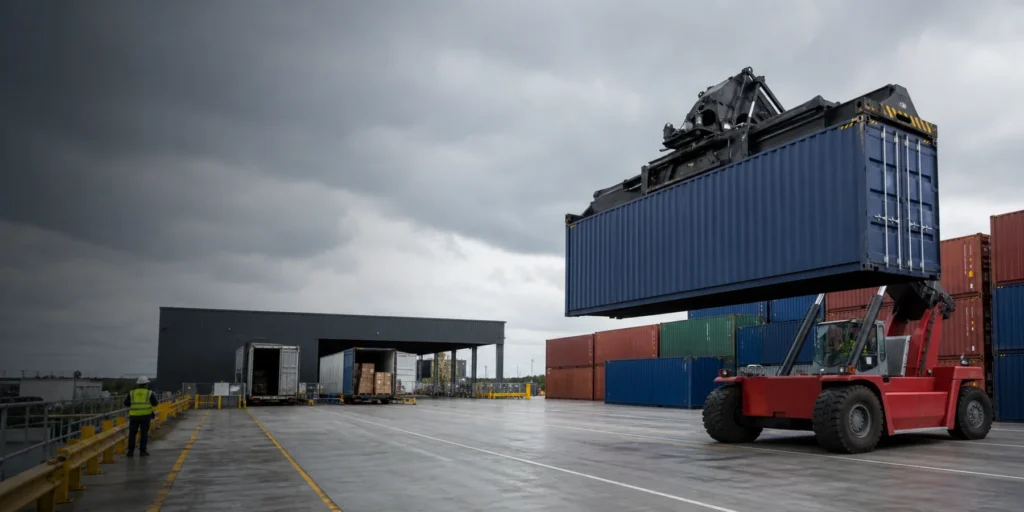
Container handling services cover the operational work carried out on or around a shipping container at a depot, yard, warehouse or inland terminal. This can include lift-on/lift-off work, local shunting, presenting a container for inspection, devanning, routing it for cleaning or repair, and arranging the short moves needed between those activities.
The page does not replace substantive road container transport, long-term container storage or a single standalone container lift. TransportCompanies.co.uk connects buyers with third-party providers whose facilities, equipment and cargo acceptance must be checked for each job.
Common container handling operations
- Lift-on/lift-off using suitable depot equipment.
- Local shunting between a gate, stack, bay and warehouse.
- Grounding or presenting a container for loading or inspection.
- Devanning, stripping or unloading cargo into a warehouse.
- Stuffing or loading cargo into a container where offered.
- Seal checks, condition recording and inspection coordination.
- Routing boxes to cleaning, testing, maintenance or repair facilities.
Not every facility does all of these. A storage yard may not have a devanning warehouse; a warehouse may not accept loaded tank containers; and a reach-stacker depot may still decline damaged or modified equipment.
LoLo and short yard moves
Lift-on/lift-off, usually shortened to LoLo, moves the container between a suitable vehicle, the ground and a stack using a reach stacker, crane or other purpose-designed equipment. Give the container size, type and gross weight before arrival. An unverified “standard box” description is not enough.
Shunting on this page means controlled local moves within or immediately around an operational site. Longer public-road movements should be booked as container transport, with the route, vehicle, driver hours and delivery requirements planned separately.
Devanning and cargo handling
Devanning means unloading cargo from the container. The provider needs to know whether the goods are loose, palletised, crated, hanging, fragile, hazardous, temperature-sensitive or unusually heavy. Also state the number and weight of packages, how they were loaded and what equipment is needed.
A sealed import container may need customs release before it can be opened. Agree who checks the seal, records damage, handles discrepancies and controls access. Where cargo could have shifted, become unstable or created a fumigation or atmosphere risk, the container should not be opened as a routine warehouse task.
Inspection, cleaning and repair routing
Handling providers may present a container for a condition survey or route it to a specialist for washing, steam cleaning, testing, welding or structural repair. Ask what is done on site and what is subcontracted. Cleaning requirements vary sharply between an empty dry box, a food-related container and equipment that carried a hazardous product.
The IMO Convention for Safe Containers explains the international safety-approval framework. It does not mean a depot can certify every repair or that a visible plate removes the need to check current condition.
Cargo, weight and site information
For a useful quote, give the container number, size and type, empty or loaded status, actual gross weight where known or the best available estimate, cargo description, seal and customs status. State the depot or yard, required operations, number of moves and timing. Mention dangerous goods, food-grade, reefer, out-of-gauge or contamination issues at the start.
Charges and responsibility
Ask whether the quote includes gate moves, lifts, weighing, devanning labour, forklift use, pallet handling, waste, cleaning and short-term holding. Waiting, failed inspections, damaged containers and cargo discrepancies can create extra work. Insurance and liability for the container, cargo and handling activity must be agreed with the provider, not assumed from a general quote.
Need quotes for this service?
Tell us what you need, where the job is and any timing or handling details. We'll route your request to suitable transport companies.
