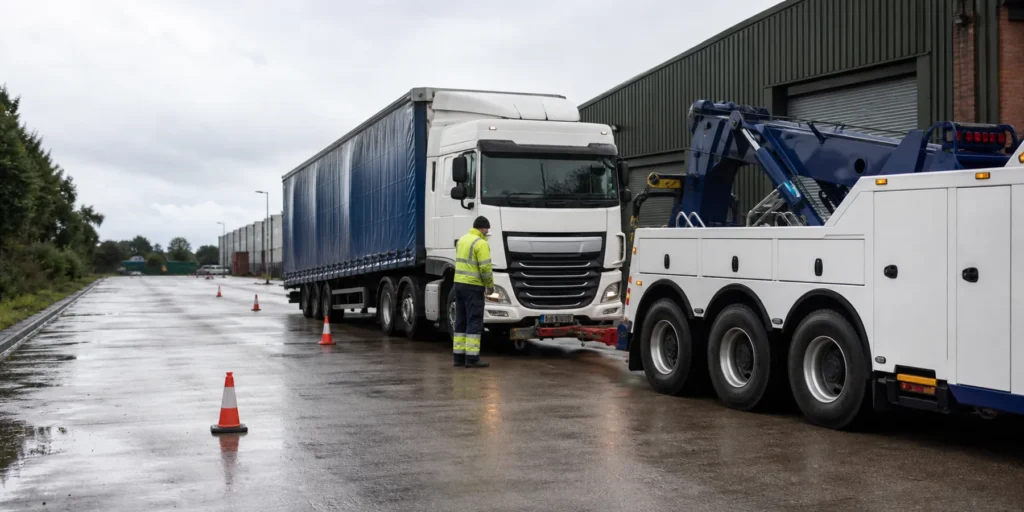
HGV recovery requires different vehicles, equipment and planning from ordinary car breakdown work. A disabled rigid, tractor unit, articulated combination, loaded trailer or coach may require heavy recovery equipment, winching, lifting or towing, load management or separate onward movement. Weight, damage, position and access determine what is practicable.
This page is for heavy commercial vehicles and trailers. Cars, motorcycles, ordinary vans, salvage collections and routine vehicle transport belong on the broader vehicle recovery page. TransportCompanies.co.uk introduces users to independent recovery providers and does not dispatch vehicles or promise attendance, coverage or outcomes.
Heavy commercial vehicles that may need recovery
Providers may recover rigid HGVs, tractor units, articulated vehicles, buses, coaches, trailers and some specialist commercial vehicles. Capability varies by gross weight, axle arrangement, vehicle condition and location. A recovery operator able to move an empty tractor unit may not be equipped for a loaded artic, rolled vehicle or abnormal-load combination.
Give the make, model, registration, gross vehicle or train weight, axle configuration and dimensions. Explain whether the engine runs, air builds, steering operates, brakes release and wheels turn. Do not guess if damage makes these points uncertain.
Loaded trailers and cargo information
Declare whether the vehicle or trailer is loaded and provide the cargo, approximate weight, distribution and securing status. Tell the provider about refrigerated, high-value, dangerous, waste, livestock, liquid or out-of-gauge loads. The cargo may prevent normal towing or require another specialist provider, transhipment, temperature support or incident authority approval.
Recovery of the vehicle does not automatically include cargo handling, salvage, clean-up or storage. Agree who is responsible for the load, seals, condition records and onward movement. Container freight needing a normal planned road move belongs on container transport, not emergency recovery.
Breakdown, collision and damaged-vehicle recovery
A mechanical breakdown in a depot may be relatively controlled. A collision, jack-knife, wheel loss, suspension collapse or vehicle on soft ground can require a different response. Provide photographs only where they can be taken safely and lawfully. State any police, National Highways, road authority, port or site-controller involvement and the instructions already given.
Do not remain in a dangerous position to complete an online form. If there is immediate danger, injury, fire, spillage or an obstruction on a live road, contact the emergency services or relevant road authority and follow their instructions. TransportCompanies.co.uk is not an emergency call-handling service.
Collection access and recovery destination
Give the precise location, road direction, depot gate, loading bay or site contact. Mention low bridges, narrow entrances, soft ground, height limits, restricted turning space and whether traffic management is in place. The recovery provider must decide the appropriate attendance and method.
Confirm the proposed destination: the operator’s depot, an approved commercial workshop, a secure holding location or another authorised site. A workshop must accept the vehicle before arrival. For diagnosis or repair, compare commercial vehicle repair providers.
Information providers commonly request before dispatch
- Exact location, direction of travel and safe site contact.
- Vehicle, trailer and operator details, dimensions, axles and weight.
- Loaded or empty status, cargo, approximate load and any hazards.
- Fault, collision damage, wheel, steering, brake and suspension condition.
- Photographs where they already exist or can be obtained without risk.
- Police, highway, port or depot instructions and incident reference.
- Required destination and confirmation that the site will accept the unit.
Roadside repair or full recovery
Some heavy-recovery businesses also offer mobile diagnostics or repair, but this depends on the fault, location and safety of the working area. A call-out does not guarantee a roadside repair. The provider may determine that recovery to a workshop is the only appropriate option.
HGV recovery charges
Charges can reflect call-out time, distance, vehicle weight, crew, equipment, winching, lifting, traffic management, waiting, storage and onward delivery. Out-of-hours and complex incidents may be priced differently. Ask what the initial quotation or authority to proceed covers, how additional work is approved and whether VAT, storage or second movements are separate.
Insurance or roadside-assistance policies may require authorisation or a nominated supplier. Check this before instructing work where circumstances allow; do not delay an emergency response to compare ordinary quotes.
Related commercial support
For a vehicle awaiting repair or replacement equipment, compare HGV and truck parking and commercial trailer hire. For ordinary car, van, salvage or dealer movements, use the existing vehicle recovery directory.
Need quotes for this service?
Tell us what you need, where the job is and any timing or handling details. We'll route your request to suitable transport companies.
