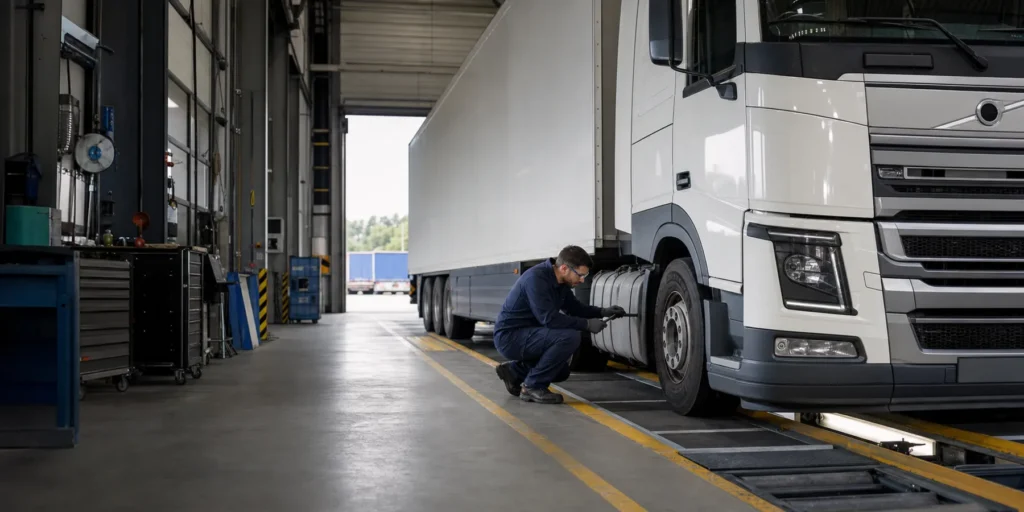
Commercial vehicle repairs range from planned servicing and defect rectification to diagnostics, brake work, trailer repairs and major mechanical jobs. Operators may need a regular maintenance contractor, a workshop near a depot or port, or specialist help for a particular vehicle, body or system.
TransportCompanies.co.uk introduces operators to independent workshops and repair providers. It does not inspect vehicles, certify repairs or guarantee that a provider has a particular approval, tool or diagnostic capability. Confirm the workshop, technician competence, scope, records, parts, warranty and charges for the actual job.
Vehicles and trailers a workshop may cover
A commercial workshop may accept rigid HGVs, tractor units, trailers, buses, coaches, light commercial vehicles or specialist fleet equipment. Physical capacity matters: door height, pit or lift capacity, brake-test equipment, yard space and recovery access can exclude certain vehicles. Manufacturer diagnostics and alternative-fuel competence also vary.
State the make, model, registration, chassis or fleet number, gross weight, axle configuration, body type and current location. For a trailer, include its body, axles, braking system and whether it is loaded. Tell the provider about refrigeration, tail lifts, cranes, dangerous-goods equipment, high-voltage systems or other specialist components at the start.
Planned maintenance and safety inspections
Operators need an effective system for keeping vehicles and trailers roadworthy. The current DVSA Guide to Maintaining Roadworthiness covers safety inspections, facilities, records, maintenance planning and contracted maintenance.
A workshop can provide agreed inspection and repair work, but the operator remains responsible for an effective maintenance system. Confirm inspection intervals, booking capacity, what is examined, how defects are graded, who authorises repairs and when signed records will be supplied. Do not treat a general service invoice as a substitute for the required safety-inspection record.
Diagnostics, brake tests and annual test preparation
Capability may include fault-code diagnostics, electrical work, brake performance testing, steering and suspension, tyres, emissions-related faults, body repairs and annual test preparation. Ask what equipment is on site and whether the proposed test is laden or unladen. Preparation can identify and correct faults but cannot guarantee a pass at the annual roadworthiness test.
For an urgent defect, give warning lights, symptoms, fault codes, noises, leaks and recent work. Photographs or a driver report can help, but the provider may still need an inspection before estimating parts, labour or completion time.
Trailer repair, fabrication and welding
Trailer work can include brakes, suspension, electrics, doors, curtains, floors, landing legs, underrun protection and body components. Some commercial workshops also fabricate brackets, panels or replacement sections and undertake coded or specialist welding where appropriate. Ask what materials and safety-critical work the provider accepts and what inspection follows the repair.
Structural, pressure, lifting-equipment or dangerous-goods-related work can require specialist competence or a separate examination. Do not assume an in-house welding facility is authorised for every component.
Mobile repairs and recovery to a workshop
Some providers offer depot call-outs or limited roadside attendance. Give the exact location and explain whether the vehicle is in a depot, yard, loading bay or public-road incident. Do not attempt to arrange ordinary repair work from a dangerous live-carriageway position; follow police, highway-authority or emergency-service instructions.
If the vehicle cannot be repaired where it stands, request specialist HGV and truck recovery to an agreed workshop. Cars and light general recovery belong on the broader vehicle recovery page.
Information to include in a repair enquiry
- Vehicle or trailer make, model, registration, weight and configuration.
- Fault, defect notice, inspection requirement or maintenance scope.
- Symptoms, diagnostic codes, photographs and recent repair history.
- Loaded or empty status and any specialist body, cargo or fuel system.
- Current location, access and whether the unit can be moved legally and safely under its current condition.
- Operational deadline and whether replacement equipment is being arranged.
- Purchase-order, estimate, authorisation and record requirements.
Estimates, parts and warranty
Ask whether diagnosis is charged separately, whether an estimate is fixed or provisional, and who can authorise additional work. Confirm parts type, availability, storage, collection and payment terms. Any workmanship or parts warranty should be stated in writing with its exclusions; it should not be assumed from a directory introduction.
Related fleet support
Operators can compare commercial trailer hire while equipment is off road or arrange HGV parking for vehicles awaiting a slot. Drivers remain responsible for required checks; the DVSA provides a practical HGV walkaround-check guide.
Need quotes for this service?
Tell us what you need, where the job is and any timing or handling details. We'll route your request to suitable transport companies.
